


Washer and Dryer Installation: A Homeowner’s Guide

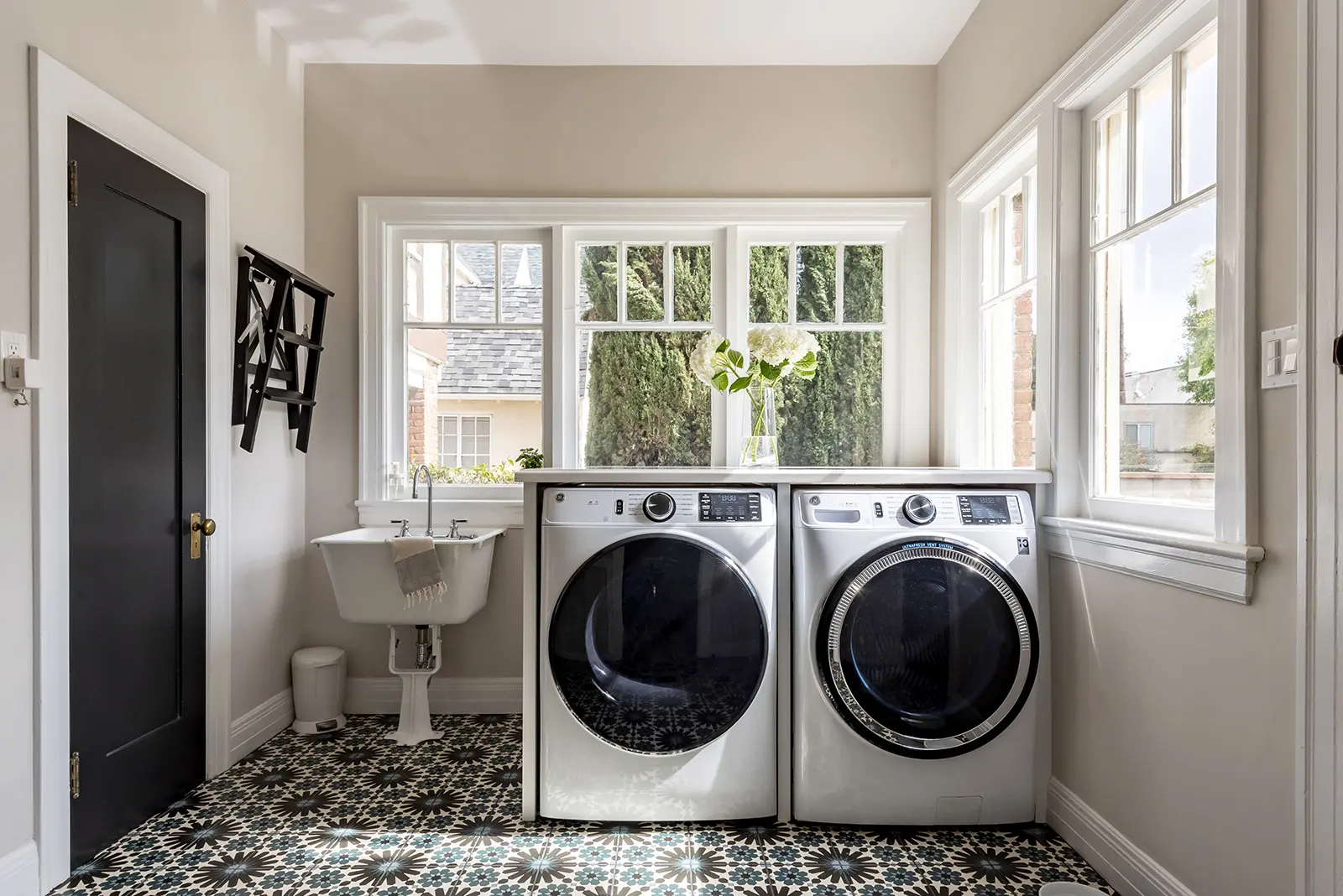
Adding a washer and dryer can make everyday life much easier, but the installation may involve more than connecting two appliances. You may need new plumbing, drainage, electrical work, dryer ventilation, permits, or approval from your building.
The first step is to find out what your home can support. A contractor can check the proposed location, identify the work needed for the washer and dryer hookup, and help you understand the likely cost and schedule.
Key takeaways for washer and dryer installation
- Installing a washer and dryer is usually easier when compatible hookups already exist.
- A washer needs water lines, drainage, electricity, and accessible shutoff valves.
- A dryer may need a dedicated electrical connection, gas line, or exterior vent.
- Condos and co-ops may require board approval before work begins.
- New plumbing or electrical work may require local permits.
- Costs and timelines depend on the location, existing utilities, and amount of construction.
What does washer and dryer installation require?
Washer and dryer installation requires enough space, suitable utility connections, proper drainage, electrical service, and safe dryer ventilation when needed. The appliances should also remain accessible for installation, maintenance, and future replacement.
Connecting machines to compatible hookups is usually a smaller job. Creating a new laundry area may involve opening walls, extending plumbing, adding electrical service, installing a dryer vent, and repairing the finishes afterward.
What is a washer and dryer hookup?
A washer and dryer hookup is the group of connections needed to run the appliances. Depending on the models you choose, this can include water lines, drainage, electricity, gas, and dryer ventilation.
A home described as having laundry hookups may not support every appliance. Your contractor should compare the existing connections with the specifications for the washer and dryer you plan to buy.
Washer hookup requirements
A washing machine usually needs the following:
- Hot and cold water connections
- A drain line
- An electrical outlet
- Accessible water shutoff valves
- Room for hoses behind the appliance
- A level floor
- Access for repairs
- Protection against leaks or overflow
A licensed plumber can determine how the new water and drain lines will connect to the home’s existing plumbing. The scope may be more involved when the proposed laundry area is far from a kitchen, bathroom, or utility room.
Dryer hookup requirements
An electric dryer needs the correct outlet and enough electrical capacity. A gas dryer also needs a professionally installed gas connection.
Most conventional dryers need a vent that directs exhaust outside. Ventless models can be useful where an exterior vent isn’t practical, but the appliance’s electrical, drainage, and clearance requirements still need to be checked.
Planning to renovate? Get free cost estimates from our partner GCs!
Get matched with our vetted general contractors and receive at least 3 quotations for free! You can also find endless home renovation inspiration, detailed guides, and practical cost breakdowns from our blogs.
Where can I install a washer and dryer?
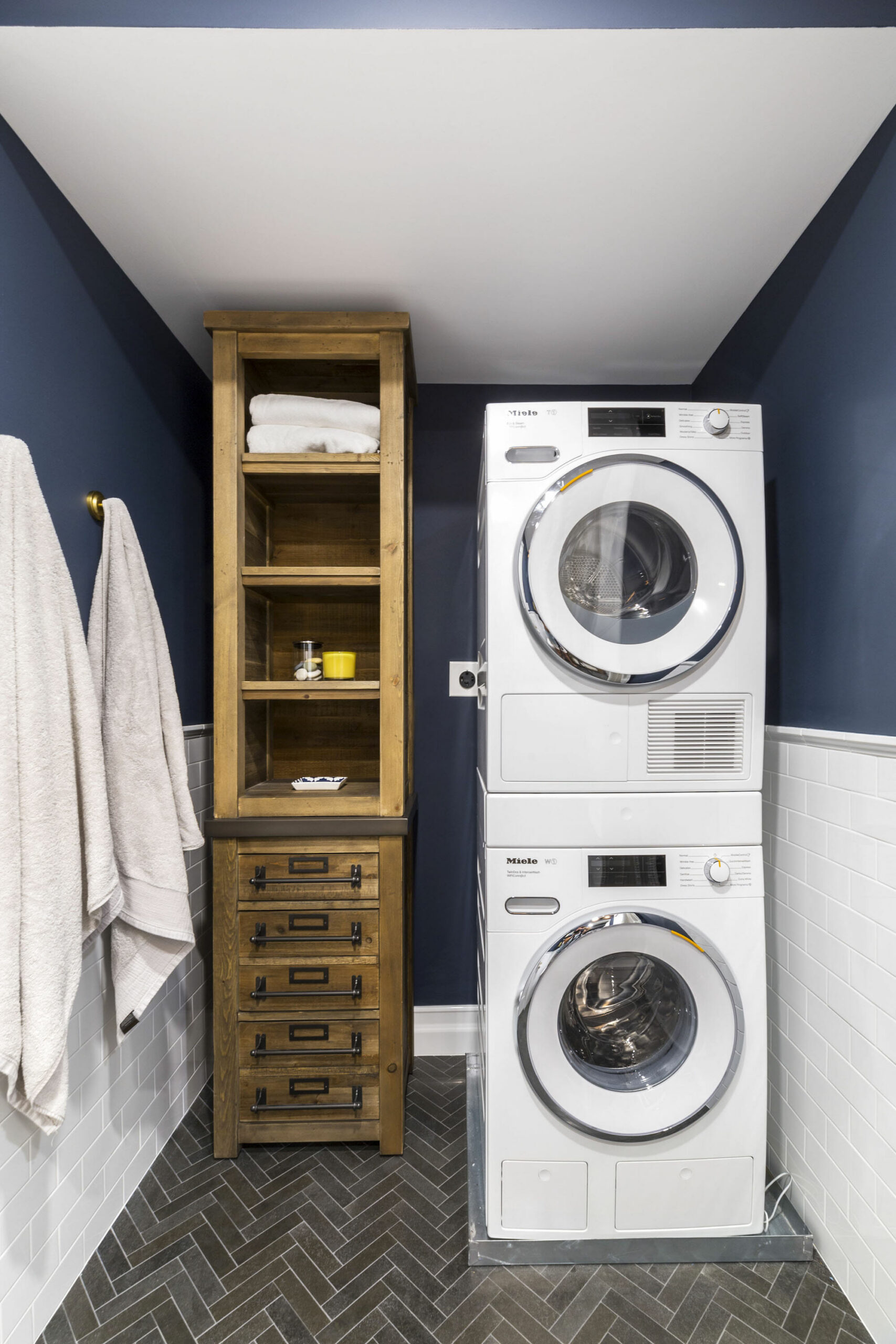
Most homeowners install a washer and dryer in a kitchen, bathroom, hallway closet, basement, garage, mudroom, utility room, or dedicated laundry room. The right location depends on the available space, access to utilities, and any building restrictions.
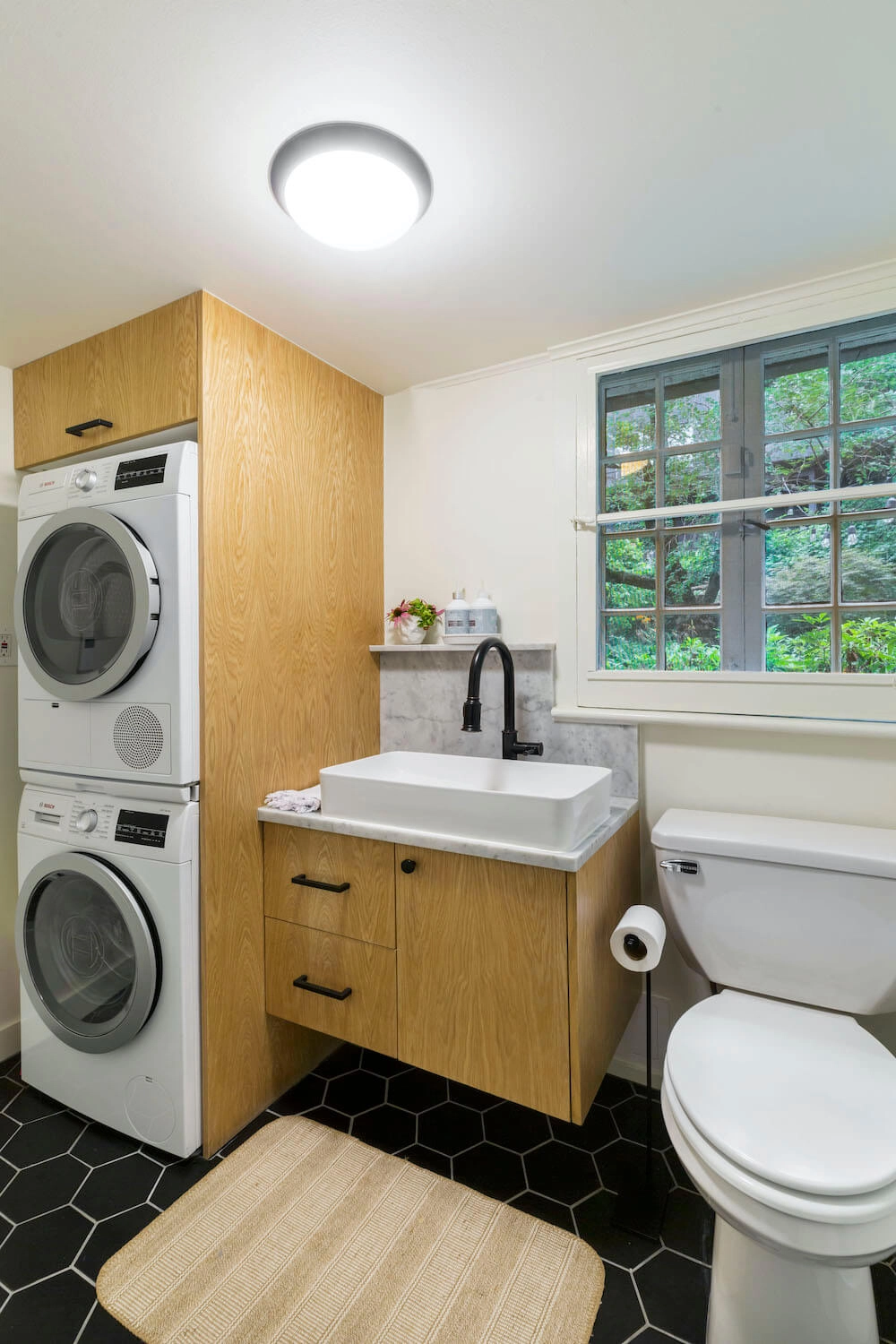
Sweeten homeowners have added laundry to former showers, bathroom walls, hallway closets, kitchens, and other compact spaces. These small laundry room ideas show several ways to fit appliances into an existing layout.
A larger renovation may create room for shelving, cabinetry, a folding counter, or a separate enclosure. Sweeten’s guide on how to create a laundry room covers several ways to add a laundry area during a remodel.
Should laundry stay near existing plumbing?
Yes, laundry should usually stay near existing plumbing when the layout allows it. Placing the washer close to a kitchen, bathroom, or utility room may reduce the distance that new water and drain lines need to travel.
Nearby plumbing doesn’t guarantee an easy installation. A contractor still needs to check the pipe locations, drainage, electrical service, wall conditions, and proposed appliance dimensions.
Apartment owners may also face wet-over-dry rules. These rules can prevent laundry appliances from being installed above a neighbor’s bedroom, living room, or another dry area.
Stacked, side-by-side, or combined units?
Stacked appliances are often a good choice for a narrow closet or bathroom niche. The washer and dryer must be compatible and secured with the correct stacking kit.
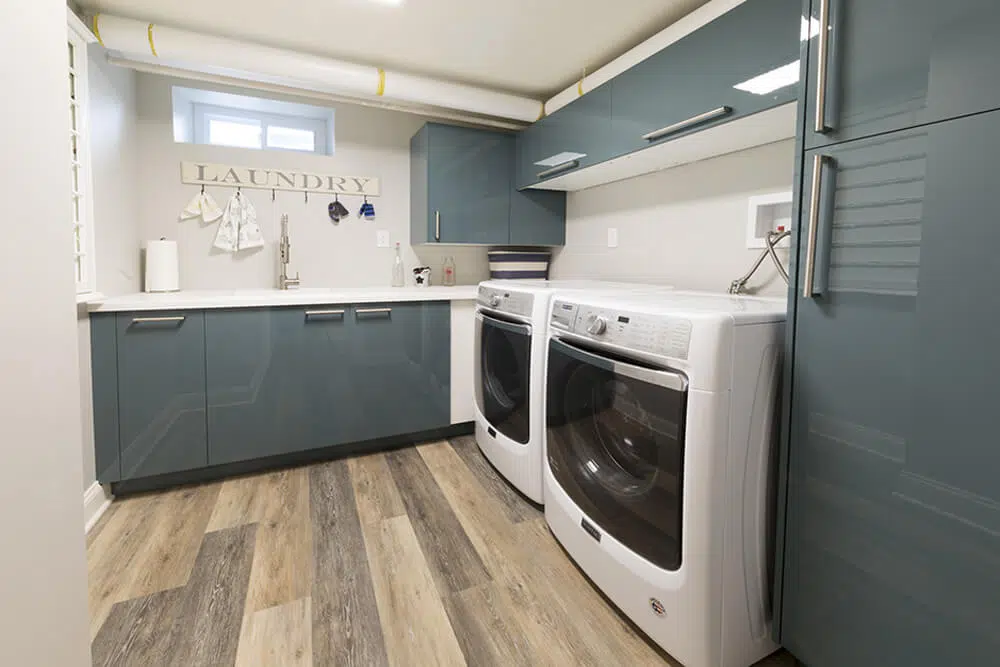
Side-by-side machines require more floor space, but they can support a counter or storage above. They may also be easier to access because both appliance doors sit closer to the floor.
An all-in-one washer-dryer combines both functions in one appliance. It can fit into a small area, though homeowners should compare its capacity, cycle times, and hookup requirements before choosing it.
Do I need approval for washer and dryer installation?

Yes, you may need approval for washer and dryer installation, depending on the type of home and the work involved. Condo owners, co-op shareholders, and renters often need permission before changing plumbing, electrical service, walls, or ventilation.
| Property type | Approval to check |
|---|---|
| Single-family home | Local permitting authority |
| Condo | Association or building management |
| Co-op | Co-op board and building management |
| Rental | Landlord or property owner |
Building approval doesn’t replace any permits required by the local government. A city permit also doesn’t override a condo association’s rules or a landlord’s decision.
Condo and co-op approval
Start by reviewing the alteration agreement and house rules. Some buildings prohibit in-unit laundry, while others only approve it after reviewing the plans and appliance specifications.
Older buildings may have limited plumbing or electrical capacity. Boards may also be concerned about leaks, overflow, noise, or damage to neighboring apartments.
The board may request architectural drawings, contractor insurance, a scope of work, plumbing details, and proposed leak-protection measures. Sweeten’s guide to NYC layout changes explains alteration agreements, wet-over-dry rules, board reviews, and permit filings in more detail.
Check the building’s rules before purchasing appliances or hiring an architect. An installation allowed in one building may not be accepted in another.
Adding laundry to a rental
Renters should get written approval before changing plumbing, electrical service, walls, cabinetry, or ventilation. The lease may also limit which appliances can be installed.
The agreement should explain who will pay for the work and who will own the improvements. It should also address appliance removal when the tenant moves out.
Do I need a permit to install a washer and dryer?
Yes, you may need a permit to install a washer and dryer when the work includes new plumbing, drainage, electrical wiring, gas lines, ventilation, or construction. The exact requirements depend on local rules and the proposed scope.
Possible requirements include:
- Plumbing permits
- Electrical permits
- Gas permits
- Building permits
- Architectural or engineering plans
- Inspections
- Final approval
A small laundry closet isn’t automatically exempt from permits. Extending a drain, adding a circuit, moving gas lines, or opening walls can still count as renovation work.
Your contractor, architect, plumber, or electrician can help confirm what needs to be filed. Check the local building department before construction begins.
Steps to washer and dryer installation

The following are the steps to proper washer and dryer installation:
Step 1: Evaluate the location
A contractor checks the available space and nearby utilities. The review should also cover appliance access, door swings, noise, ventilation, and room for future repairs.
Apartment projects require an additional review of the building’s alteration agreement. There’s little value in developing a layout that the board won’t approve.
Step 2: Choose the appliances
Select the washer and dryer before the final utility plan is completed. The contractor needs the exact dimensions, connection details, door direction, and required clearances.
Don’t rely only on the advertised width and height. Hoses, plugs, dryer ducts, baseboards, and doors can affect the space needed for installation.
Step 3: Secure approvals and permits
Submit any required plans, appliance details, insurance documents, and contractor information. The necessary permits should also be arranged before construction starts.
Approval time is separate from installation time. A job that takes only a few working days may still require several weeks of planning or review.
Step 4: Add the hookups
Licensed tradespeople complete the plumbing, electrical, gas, and ventilation work included in the project. Parts of the wall or floor may need to be opened to reach the existing systems.
The electrician should confirm that the home can handle the added load. The plumber should handle new water, drain, and gas connections as required.
Step 5: Finish the space
A new laundry closet may require framing, doors, drywall, paint, trim, flooring, or cabinetry. The design should leave shutoff valves, outlets, drains, and vents easy to reach.
Storage can be planned around the appliances, but it shouldn’t block airflow or access. Leave enough room to disconnect and remove the machines later.
Step 6: Connect and test the appliances
The installer connects and levels the washer and dryer. Each appliance should then be tested before the project is considered complete.
The washer should fill, run, and drain without leaking. The dryer should operate correctly through its electrical, gas, or ventilation connection.
How much does washer and dryer installation cost?
Washer and dryer installation costs about $7,000 to $15,000 in a city apartment, while a house with fewer building and access restrictions can range from $3,000 to $5,000. The higher end of the apartment range can include building a closet for the appliances, while the higher end for a house can include creating a new room or enclosed laundry area.
The final cost depends on how much work is needed behind the walls. Connecting appliances to working hookups will cost less than adding new plumbing, electrical service, ventilation, walls, doors, and finishes.
| Project scope | Main cost factors |
|---|---|
| Existing hookups | Delivery, connection, leveling, and testing |
| New washer hookup | Plumbing, drainage, electrical work, and repairs |
| New dryer hookup | Electrical or gas work and ventilation |
| New laundry closet | Framing, doors, finishes, and utility work |
| Condo or co-op installation | Plans, approvals, insurance, and building access rules |
| Larger renovation | Laundry work added to the main renovation scope |
City apartment projects may cost more because of parking, elevator scheduling, restricted working hours, building protection, and added insurance requirements. Working inside a multi-unit building also carries greater responsibility if a leak affects another home.
The total can also increase when the project requires:
- Long plumbing or electrical runs
- Electrical panel upgrades
- New gas service
- Exterior dryer venting
- Wall or floor demolition
- Custom doors or cabinetry
- Architectural or engineering services
- Permit and inspection fees
- Leak-protection systems
- Compact or specialized appliances
- Difficult delivery access
Ask for an itemized estimate that separates appliance costs from construction. It should also state who will handle permits, finish repairs, delivery, and old appliance removal.
How long does washer and dryer installation take?
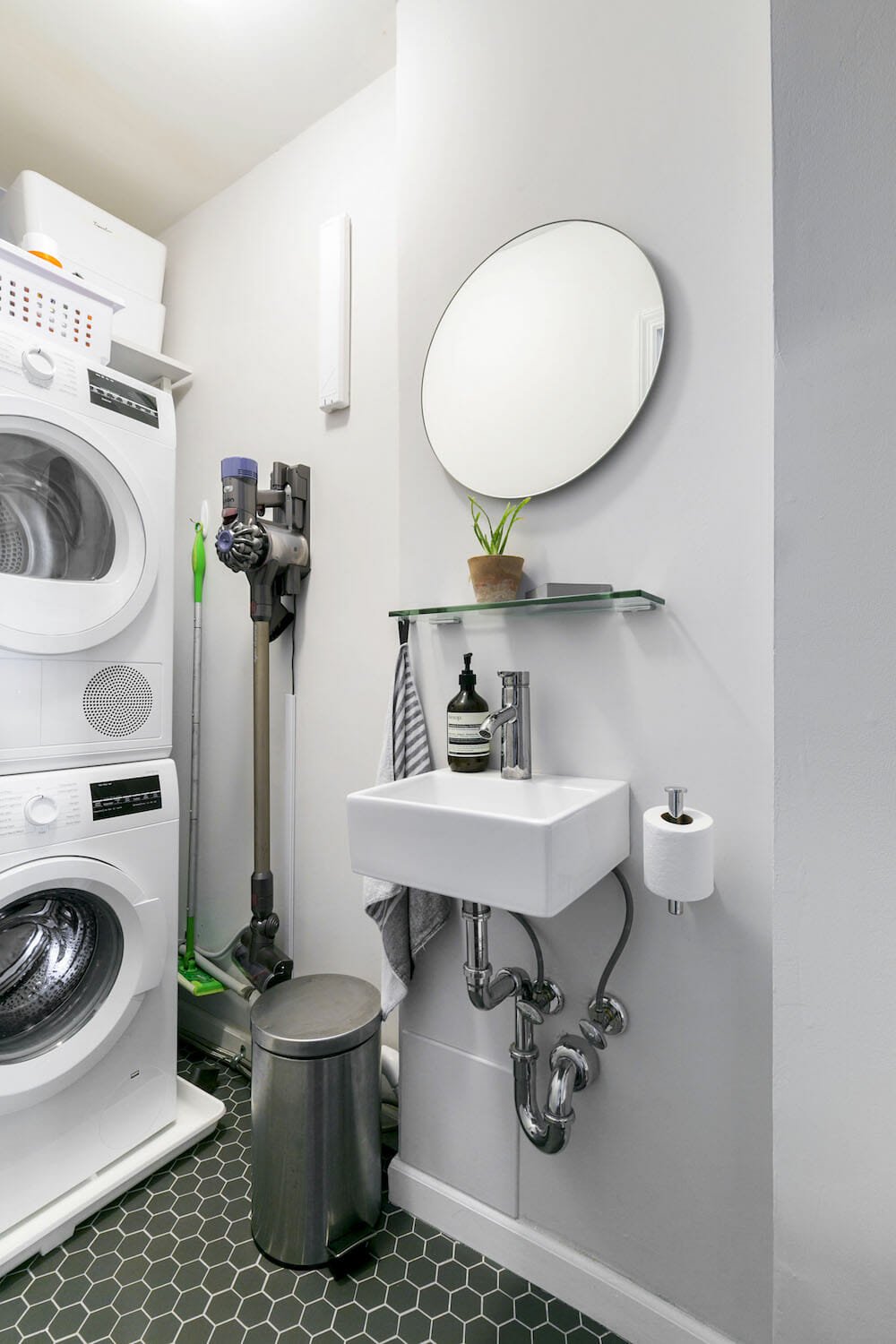
Washer and dryer installation typically takes 3 to 5 working days. This timeframe can include plumbing and electrical work, wall repairs, drying time, painting, and final appliance connection.
More involved projects can take longer, especially when the contractor needs to build a new laundry closet, relocate utilities, install custom cabinetry, or complete inspections.
| Project scope | Timeline consideration |
|---|---|
| Existing hookups | Usually the shortest installation |
| Minor hookup work | May require several visits from different trades |
| New plumbing and electrical work | Often takes several working days |
| Wall repairs | Adds wall closure, drying, and painting time |
| New laundry closet | Adds framing, doors, and finish work |
| Condo or co-op installation | Building approval may take longer than construction |
| Larger renovation | Follows the schedule for the main renovation |
The full schedule may also include building approval, permits, inspections, and appliance delivery. Ask your contractor which dates are within the team’s control and which depend on outside reviewers.
Choosing the right washer and dryer

Choose machines that suit the available space, hookups, and household needs. An appliance isn’t a good fit if it requires a connection your home can’t support or doesn’t leave enough room for installation and maintenance.
Compare the following before buying:
- Width, height, and depth
- Required clearances
- Capacity
- Door direction
- Stacking compatibility
- Electric or gas requirements
- Vented or ventless drying
- Noise and vibration
- Electrical needs
- Drain requirements
- Maintenance access
Sweeten’s guide to washing machine types compares front-loading, top-loading, high-efficiency, and combination models. Your contractor should still check the specifications for the exact appliance you select.
Vented vs. ventless dryers
A vented dryer needs a safe route to the exterior. This route should be planned before walls, cabinets, or doors are installed.
A ventless dryer may suit an interior room or apartment without exterior access. Its power, drainage, and clearance requirements still need to be included in the plan.
When stacked units make sense
Stacked units can fit into a closet, alcove, or narrow bathroom area. They preserve floor space but require enough height and access for service.
Use appliances approved for stacking and the correct installation kit. The enclosure should leave enough room to connect and remove both machines.
Washer and dryer installation checklist

Before requesting estimates:
- Choose one or more possible locations.
- Review building or landlord rules.
- Check for existing hookups.
- Identify nearby plumbing and drainage.
- Confirm the electrical service.
- Decide between vented and ventless drying.
- Compare stacked and side-by-side layouts.
- Measure the room and delivery path.
- Gather appliance specifications.
- Ask which permits are required.
- Confirm which licensed trades are needed.
- Discuss leak protection.
- Decide if cabinetry or doors are included.
- Request an itemized estimate.
- Review the full project schedule.
Plan your installation with a contractor
A washer and dryer installation can be a small standalone job or one part of a kitchen, bathroom, basement, or full-home renovation. A qualified contractor can check the space, coordinate the trades, and explain the likely cost and schedule.
Sweeten connects homeowners with vetted general contractors and provides support throughout the renovation process at no cost to the homeowner. Learn how Sweeten works when you’re ready to plan your project.
Ready to renovate? Start here for free!
Here you can learn more about our services and locations. Alternatively, browse more home renovation inspirations, processes, and cost guides.
Frequently asked questions
What is included in washer and dryer installation?
Washer and dryer installation usually includes placing, connecting, leveling, and testing the appliances when compatible hookups already exist. A larger project may also include new plumbing, electrical service, gas lines, dryer ventilation, permits, and finish repairs.
Can you install a washer and dryer without hookups?
Yes, you can install a washer and dryer without existing hookups, but licensed professionals may need to add water lines, drainage, electrical service, gas, or dryer ventilation. The work may also require permits and wall repairs.
Can you add a washer and dryer to a condo?
Yes, you may be able to add a washer and dryer to a condo if the association approves the plan. The best plan is to always include an experienced general contractor to give you proper advice on how to move forward.
{“@context”:”https:\/\/schema.org”,”@type”:”FAQPage”,”mainEntity”:[{“@type”:”Question”,”name”:”What is included in washer and dryer installation?”,”acceptedAnswer”:{“@type”:”Answer”,”text”:”
Washer and dryer installation usually includes placing, connecting, leveling, and testing the appliances when compatible hookups already exist. A larger project may also include new plumbing, electrical service, gas lines, dryer ventilation, permits, and finish repairs.”}},{“@type”:”Question”,”name”:”Can you install a washer and dryer without hookups?”,”acceptedAnswer”:{“@type”:”Answer”,”text”:”
Yes, you can install a washer and dryer without existing hookups, but licensed professionals may need to add water lines, drainage, electrical service, gas, or dryer ventilation. The work may also require permits and wall repairs.”}},{“@type”:”Question”,”name”:”Can you add a washer and dryer to a condo?”,”acceptedAnswer”:{“@type”:”Answer”,”text”:”
Yes, you may be able to add a washer and dryer to a condo if the association approves the plan. The best plan is to always include an experienced general contractor to give you proper advice on how to move forward.”}}]}
The post Washer and Dryer Installation: A Homeowner’s Guide appeared first on Sweeten.