


Unexpected Inheritance – FineWoodworking


For the last five years—a solid third of my life—I have been planing, sawing, chiseling, and, above all, reading inhuman amounts of Fine Woodworking. I began my craft journey one summer at age 10 with a singular vision—to build a kayak from scratch. I had developed a deep fascination with the idea of kayaking, despite only having kayaked once in my life. By the end of that summer, after obsessively reading online tutorials, watching YouTube videos, and buying books on the subject, I had crafted an 8-ft. kayak out of marine plywood and fiberglass. Paddling that kayak in a small pond, then paddling it a half mile across a reservoir, gave me a satisfaction that I had never experienced before. One day there was some wood on a workbench; the next there was a beautiful boat three times as tall as I was. More than anything else, I grew addicted to the look of oiled wood.
Each curiosity led to another.
I turned our basement into a shop when I was 11, built desks and tables, and used my new skills to start a tool repair and sharpening business when I was 12. At first I was sharpening for friends, but soon the word spread and strangers from the neighborhood were bringing me their tools and kitchen knives. Despite the inflow of sharpening funds and my parents’ generous contributions, there were still holes in my tool lineup (not to mention in my woodworking skills!) that prevented me from attempting certain projects.
Then in the spring of 2023 the Philadelphia Inquirer wrote an article about me: “Mount Airy Seventh-Grader Runs His Own Knife-Sharpening Business.” I had jumped at the chance to have the article written; I saw it as an opportunity to make the adults in my life proud. I was totally unprepared for what happened next, however.
A few days after the article was published, the reporter forwarded me a note from a man named Martin Todt.
“Thank you for your article on Mozi the woodworker. I read with great interest in this remarkable young man. I am a 73-year-old retired contractor and woodworker. I live in Bensalem and have a complete woodworking shop filled with old tools left to me by my grandfather and great-grandfather that I have enjoyed using to build furniture for 50 years. I have no one to leave these tools to and was hoping to find a place for them to continue to be used. I would let Mozi take his choice at no cost to him.”
Soon after I received Martin’s note, my father and I drove an hour to his home. Standing outside, I looked up at him and tried to give him a good handshake. We had connected in such a quirky way, and I felt nervous. However, as soon as we entered his shop, the language of woodworking bridged the gap. He explained that many of his hand tools, such as the Stanley No. 45 multi-plane he showed me, which was made in the 1910s, had been passed down from his great-grandfather. His great-grandfather literally had bought the plane from the store! I couldn’t believe it. Martin explained the various kinds of work he had done through niche tools he showed me. One was a tool for marking stair-tread cut lines. Another was a jig hooked up to his grinder for sharpening.
When my father and I pulled back into our driveway later that day—our van loaded with tools including a bandsaw, the Stanley No. 45, multiple other planes and chisels, lathe tools, and a number of clamps—I realized I had become not just the owner of a shop’s worth of tools, but the inheritor of a legacy.
Over the next few years, Martin and I traded dozens of emails.
He gave me tips and encouragement as I embarked on a variety of wood projects. Once, when I thanked him again for his generous gifts, he wrote, “The truth is that it is hard for me to separate myself from these things, but it is also necessary. … It’s been two years since I retired, and that bandsaw hasn’t been turned on once. … Just remember you aren’t taking anything from me—you are giving me something.” To Martin, tools were meant to be used. Even though I was not able to meet him in person frequently, Martin became an important mentor for me. When he suddenly passed away in October from a stroke and lung cancer, I lost a friend five times my age.
Remarkably, Martin was not the only person who reached out to help fill my shop with tools. I met others in the woodworking trade, such as Lawrence Freifield, who introduced me to the world of antique tool collecting and invited me to tour his shop and to come to a tool meet. Upon learning I hadn’t read Antique and Collectible Stanley Tools by John Walter (1990), Lawrence simply bought the $200 book and dropped it off at my house.
Woodworking is hard to get started in, given the tool requirements.
Martin, Lawrence, and other kind people have given me such a boost through sharing their tools and wisdom. Tools may be inanimate objects, but they carry so much soul. We breathe life into our tools when we use them. When we pass, the tools of our crafts can live on, giving the next generation a chance to indulge in their own creative pursuits.
Find someone and teach them the story of your tools. Share your wisdom and experience, and perhaps gift them a few ordinary tools. Maybe something extraordinary will happen.
Mozi Weisenberg works wood in Philadelphia.

The Living Tools Project
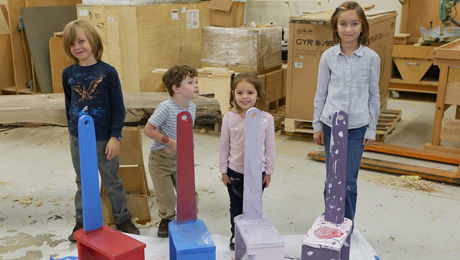
Video: Kids in the Shop – Shaker Step Stool
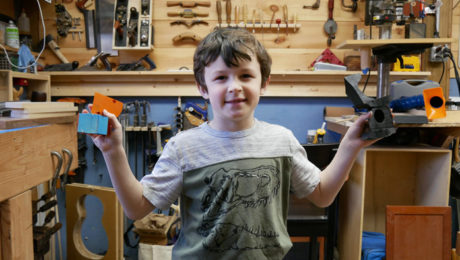
Woodworking with kids: Scrapwood sculptures
Fine Woodworking Recommended Products
Tite-Mark Marking Gauge
These gauges can be easily and precisely adjusted with one hand, which allows you to set the tool while holding a ruler or workpiece in the other. The quality is exceptional, and all have sharp cutters that offer great visibility.
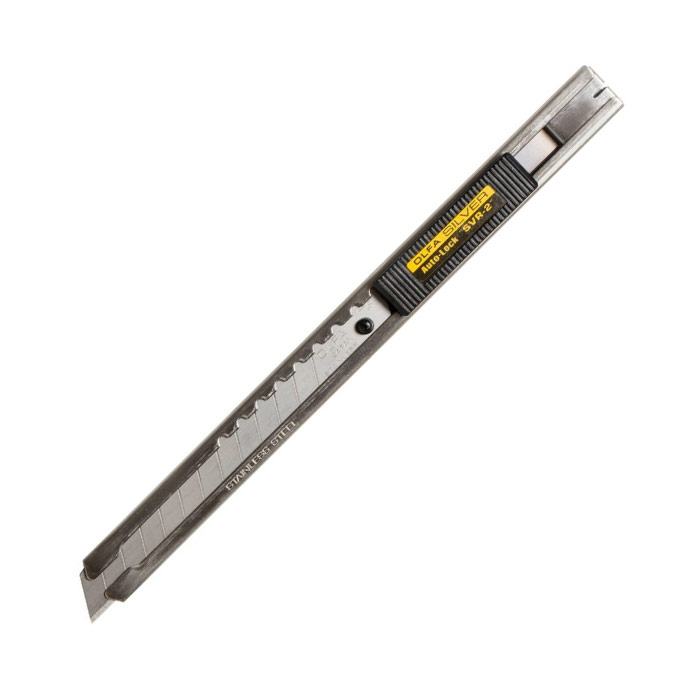
Olfa Knife
Comfortable metal handle with a break off blade. A tool for breaking off the blade is built into the handy pocket clip.

Veritas Micro-Adjust Wheel Marking Gauge
The adjuster runs through the beam from a small knob at the back end right to the cutting wheel, which moves in and out as you turn the knob. This arrangement works well but makes adjustments a two-handed operation, requiring a little more effort.
Sign up for eletters today and get the latest techniques and how-to from Fine Woodworking, plus special offers.