


Polymeric sand – what is it and what can it be used for?

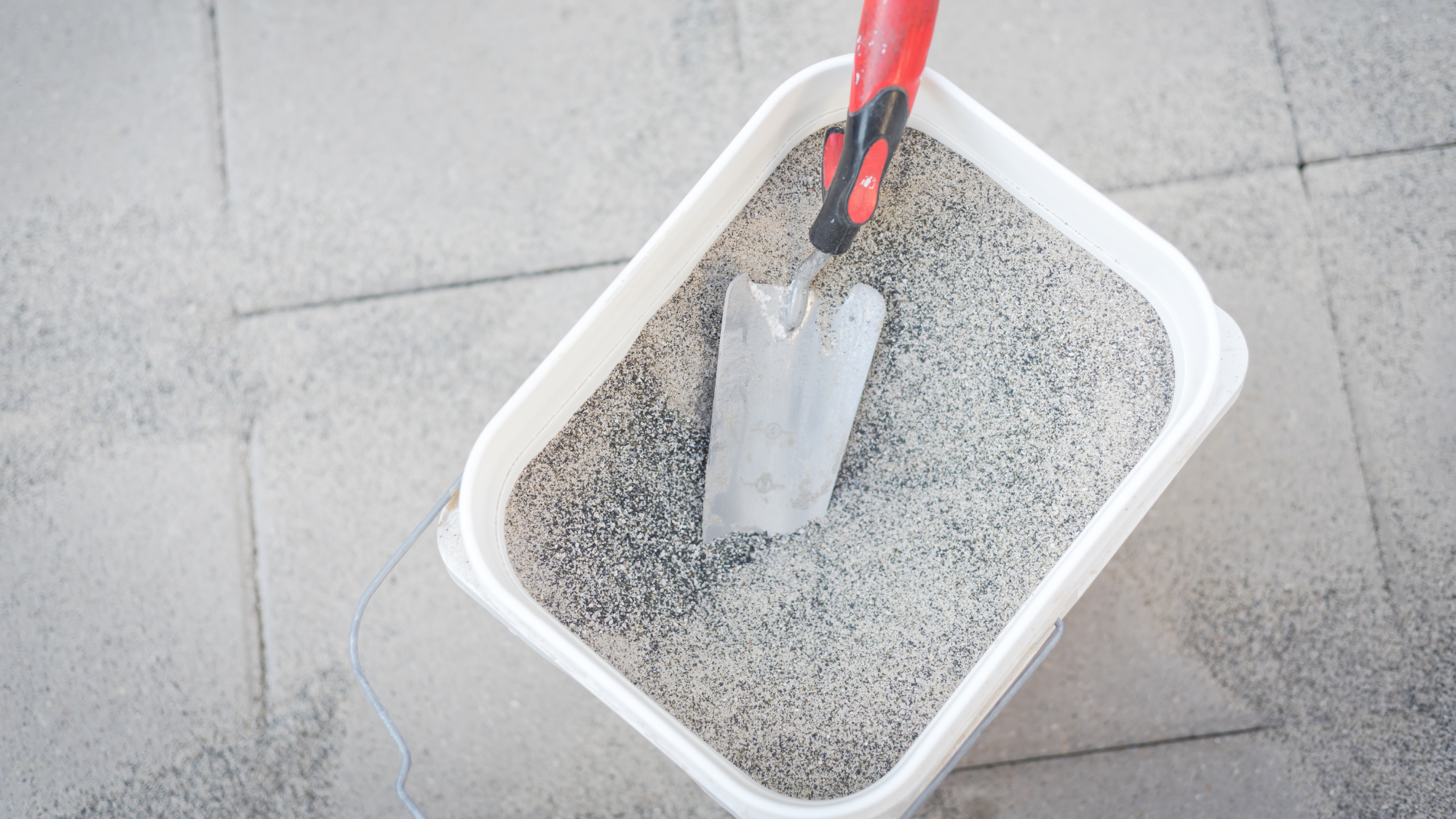
If a new driveway or patio is on the cards this year, you may be wondering what jointing material is best and whether polymeric sand is a strong contender.
While it’s not the cheapest option on the market, costing around £15–£30 per bag, it is more affordable than bound jointing systems such as resin and epoxy, and can offer better drainage.
To learn more about polymeric sand, including what it is, how it’s used for driveway ideas, and how it stacks up against other popular materials, keep reading – we spoke with two experts to find out.

What is polymeric sand and what do you use it for?
According to Andy McLaughlin of RF Paving, polymeric sand is a blend of fine-grade sand mixed with polymer binders that hardens when water is applied.
Many people use it to fill the joints in block paving, concrete paving, and natural stone paving, and although it is most commonly found on driveway materials, it can also be applied to patios, walkways and garden paths.
While it is more expensive than kiln-dried sand or basic paver joint sand, it can be a budget-friendly alternative to premium jointing materials such as epoxy and resin.
|
Polymeric sand |
Kiln-dried sand |
Resin |
|
|---|---|---|---|
|
Cost |
£15–£30 per bag |
£4–£8 per bag |
£25–£60 per bag |
|
Application |
Brushed in dry and activated with water |
Brushed into the joints and settled with a wacker plate |
Brushed into joints and compacted |
|
Durability |
Good |
Low/moderate |
Excellent |

Andy Mclaughlin is a paving and landscaping specialist at RF Paving, a family-run business who are the UK’s leading importers and distributors of stone, paving and contemporary garden solutions.
How do you apply polymeric sand?
If you like the sound of polymeric sand and fancy giving it a go, you’ll be pleased to hear that it is relatively easy to install.
Andy McLaughlin explains that you will need to pour the sand onto your paving and sweep it into the joints using a soft brush. Once the excess has been removed, spray a fine mist of water, which will activate the chemical process, causing it to harden and cure.
A word of warning: you’ll want to ensure that the excess has been completely removed before you apply the water; otherwise, you’ll be left with stained pavers. The surface should also be completely dry to prevent the mixture from setting prematurely and appearing uneven.
What you will need

Pressure washer-, weed-, and frost-resistant, this polymeric sand creates long-lasting joints and can be used by both professionals and DIYers.

Made from FSC-certified wood, this outdoor broom is ideal for applying polymeric sand, as well as tidying garden debris.
What are the pros and cons of polymeric sand?
Before you commit to installing polymeric sand, it’s worth weighing up the pros and cons, as Andy McLaughlin explains below:
Pros
- Helps to prevent weed growth within the joints
- Clean appearance
- Isn’t washed away as easily as kiln-dried sand
- Good joint stability
- You can buy permeable-grade options (meaning it complies with surface water drainage regulations)
- Cheaper than bound jointing systems
Cons
- Not a weed-free solution
- Can crack over time
- More expensive than kiln-dried sand

How long will polymeric sand last?
While the answer to this question depends on the base, climate and traffic, Luke Clarke, owner of Britannia Stone, says that on a good base in a mild climate, polymeric sand can last around eight to ten years before needing to be redone. However, if there are harsh winters and heavy use, you could be looking at redoing it every three to five years.
“It breaks down over time with frost, rain and general wear, so you do have to maintain it. It isn’t an every-year job, but you want to look over the joints once or twice a year and top up anywhere that’s gone. It’s worth resealing the surface every few years to keep the sand protected,” he adds.

Luke Clarke is the owner of Britannia Stone, a family-run reclamation and stone yard based in Sheffield.
After speaking with the experts, it is clear that polymeric sand is a strong choice for jointing, thanks to its affordable price, ease of installation and durability.
If you want a little bit of inspiration, browse through our selection of modern driveway ideas or read our practical guide on how to design a patio.