


10 pet-friendly living room ideas that are stylish and safe

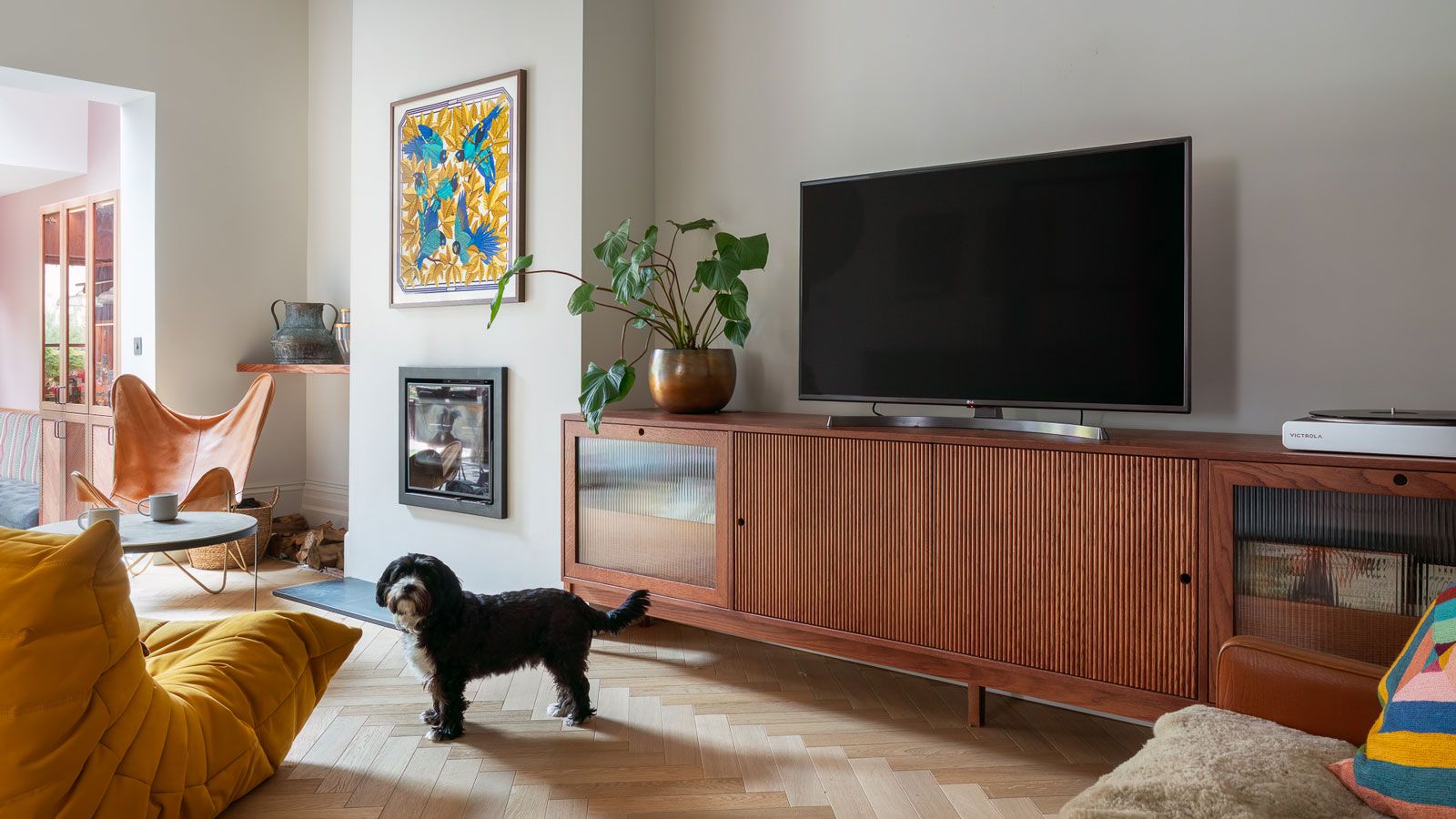
For many people, sharing their home with pets, be that a springy Spaniel or a fussy feline, brings unrivalled joy, comfort and companionship. Certainly I don’t know where I would be without my own four-legged friend, a Labrador who loves nothing more than cuddles – except to perhaps shed excessive amounts of fur all over the place – something that led me to looking into pet-friendly living room ideas in the first place.
For all the happiness these furry little pals might bring, they undeniably make a bit of a mess around the house, which is why it makes sense to make yours a pet-friendly home, not only in terms of keeping your animals happy and content, but also when it comes to reducing the amount of time and effort you have to put into keeping your spaces clean, tidy and smelling fragrant.
If, like me, you are keen to find ways of creating a living room that feels relaxing for all members of the household and is easy to keep fur-free and fresh, I have been asking a range of experts, both from the world of interior design as well as in animal care, for their top tips.
Article continues below
1. Work from the ground up
Let’s begin with the basics. It tends to be the flooring that bears the brunt of family life in general, but when you live with pets, it really does get put through its paces meaning it is more important than ever to think in terms of how your floors are going to hold up. You need to consider not only the best flooring for dogs but, if you have cats or other clawed creatures, how snag-proof your floors will be.
“The best options tend to be durable, low-toxicity, and easy to live with,” picks up interior design Shreya Vohora, co-CEO of Interiors With Art (IWA). “Natural wood (solid or engineered) with a low-VOC finish, natural stone or ceramic tile, which are hygienic and non-absorbent, and cork (solid tiles rather than click planks), which is soft underfoot, naturally antimicrobial, and helps with sound-proofing are all good choices.”
If your living room flooring ideas are based around wood, Ian Tomlinson, MD of Chaunceys Timber Flooring, has some advice on the best woods to opt for. “Oak and Ash are excellent choices due to their durability and resistance to wear. We generally advise against softer woods like Douglas Fir, which are more prone to dents and scratches.”
While carpet feels cosy underfoot, it is not necessarily the best choice if you want something easy-to-clean, although Shreya Vohora does have a few alternative ideas. “Wall-to-wall carpet tends to trap dust, dander and pollutants.
If you want softness, natural fibre rugs like wool, jute, hemp, or sisal are a good option – but I’d avoid anything treated with stain-resistant or flame-retardant finishes, as well as synthetic backings.”
Finally, LVT is also worth considering, particularly if hygiene is a big concern, according to Lorna Williams, head of product design and visual creation at Amtico. “Luxury Vinyl Tile (LVT) offers a durable yet stylish solution, designed specifically with pet owners in mind. Offering comfort, scratch and water resistance, with an easy to clean surface. Some of our collections feature advanced antimicrobial technology embedded within the urethane coating which helps prevent the growth of bacteria, viruses, and fungi.”

Shreya Vohora is an interior designer and the co-cEO of Interiors With Art (IWA), specialising in high-end residential and select hospitality projects across the UK, Middle East, and beyond. At IWA, Shreya is redefining luxury living by embedding wellness into every layer of the home, creating spaces that enhance sleep, cognition, and long-term vitality. Her work has earned recognition on the global stage, including a strategic joint venture with Sotheby’s International Realty (2026) to set new benchmarks for ultra-luxury, health-centric living in India. Shreya’s career is defined by a commitment to innovation, wellness, and designing spaces that truly nurture the human experience.

Chaunceys Timber Flooring is a family-run company based in Bristol with Ian becoming the Managing Director in 2012. They have been supplying sustainable, high-quality timber flooring to homeowners, award-winning architects, design and build companies, and renowned interior designers since 1988.

Lorna heads up the design studio at Amtico Flooring and leads the design and development of new products. She is also responsible for the creation, maintenance and evolution of Amtico International’s brands, including digital developments.
2. Give your pets somewhere to relax too

“Include safe, sensory, comfortable, resting spaces that you’ll all enjoy, either separately or together, which could include easy-to-clean chairs, sofas, dog beds or even giant dog beds,” suggests Liz Clifton, founder of Family Dog Connection. “We enjoy a big floor-based human-sized fluffy dog bed which we cover with fleece blankets so that our rescue dogs get to rest and snuggle us without the need to jump onto a sofa.
“To ensure that every family member gets to fully rest, relax, reset and renew in the living room, you can also consider a range of sensory supports,” continues Liz. “These could include pet-friendly scented plants such as rosemary and sage, calming music to enjoy together from your chosen music source, and pet-safe specific spaces/dens to hide if they choose some alone time (especially if they are rescue animals or if you also have young children in the house).

Liz Clifton is Founder of Family Dog Connection and take34u™ and TEDx Speaker, supporting you with Calm Life Coaching for you and your animals, Holistic Leadership Mentoring, Energy Healing, Animal Energy Healing and Animal Communication Training of all levels.
3. Choose sturdy, multifunctional furniture

Particularly useful for those after small living room ideas, multifunctional furniture that works both for the human occupants of a house as well as pets, makes so much sense.
“Multi-functional furniture, such as tables which offer a safe animal bed, a scratching post, or a hideaway beneath or around them, make sense,” says Liz Clifton.
Adam Brown, director at The Painted Furniture Company, reveals that the company has even developed an item of furniture for pet owners looking for both living room storage and somewhere for their pet to relax. “The Chester range allows clients to house their pet comfortably without compromising on style. It is incredibly practical, with options for built-in drawers to store leads, toys or grooming tools, and even a deeper drawer for bulk dog food. We’ve also had clients request added cupboard space to tuck away wellies and outdoor essentials.”

The Painted Furniture Co. brand was launched in 2010 by husband-and-wife Adam and Rosy who were were keen to move away from bland furniture and had decided to swap more traditional lacquer for paint. They now produce a range of furniture items and have years of experience in creating practical and stylish bedroom storage solutions.
4. Design in distractions to keep your furniture safe

“Provide pet-safe spaces for them to scratch, sniff, chew, or dig as appropriate to your animal companion’s natural self calming behaviours,” advises Liz Clifton. “Pet-safe snuggle mats or rugs can be a great addition as sniffing naturally calms – I recommend an easy-clean one that fits in your washing machine.”
“Stop treating pet areas as an afterthought” adds Shreya Vohora. “Instead of hiding bowls or beds in a corner, design them in from the outset, as you would for any other member of the household. That might mean a built-in nook, or joinery that integrates feeding areas seamlessly. When practicality is considered from the beginning, the space doesn’t need to compromise on aesthetics.”
5. Consider the layout of the space for easy flow

It is easy to overlook layout as an important part of pet-friendly living room design, yet nailing this aspect can make all the difference. Rather than attempting to steer clear of open plan living room ideas entirely and to give your pets their own zones, look at the bigger picture.
“You can’t realistically confine a pet to one area of the home. They’ll naturally move between spaces, settling wherever feels warm and comfortable,” points out Shreya Vohora. “The more sensible approach is to look not at how to section them off, but how to make the entire space safe and suitable wherever they end up. That said, designated areas still matter. Pets benefit from having their own consistent safe spaces, whether that’s a bed or a quiet corner where they feel secure.”
“Always offer them clear passage in and out of spaces so that they can choose to leave if they find the changes stressful at all,” adds Liz Clifton.
6. Choose robust, yet stylish, furniture and fabrics

Obviously in your main living space, and in particular in modern living rooms, you don’t want to feel restricted to tatty, worn-out pieces of furniture or be overly limited on your style choices, but it pays to think about how the items you choose will stand-up to life with pets.
According to Kenny Thian, products lead at Comfort Works, this is where choosing furniture with removable covers that can be washed can really help. “The most pet-friendly furniture is actually slip-covered furniture. Fixed upholstery is a liability with pets – once a cat shreds a corner or a dog has an accident, the piece is effectively ruined. Modular slipcovers allow for ‘zonal cleaning’ where you only wash that specific cover, not the whole sofa.”
Kenny also has some advice on the best fabrics for a pet-friendly living space, particularly for cat owners. “For cats, we recommend tight-weave velvets or specialised performance suedes. Cats love the loops in linen or tweed because it’s satisfying to pull. Tight-weave synthetics offer less grip for claws, making them naturally more scratch-resistant.
“Homeowners should look for fabrics with liquid-repellent coatings and machine-washability,” continues Kenny. “We recommend a ‘wash-and-wear’ rotation where you have one set of covers on the sofa and a spare set ready for quick swaps.”
“One small detail that makes a difference is furniture with raised legs,” adds Shreya Vohora. “It allows airflow and makes it much easier to clean the dust layer where pets spend most of their time, on the floor.”

Kenny Thian is a multidisciplinary design and product manager whose career has evolved from digital product and e-commerce into the world of physical product development. With a background in IT and multimedia design, he brings together digital strategy, visual storytelling, and hands-on product thinking across areas such as UI/UX, branding, 3D, research and development, and prototyping. His work reflects a thoughtful balance between creativity and practicality, turning ideas into customer-focused products and experiences.
7. Put measures in place to cut down on pet odours

However much you love your pet, there is a reason why you don’t see dog-scented candles in the shops. Thankfully, there are steps to keep a living room smelling fresh without banning your pooch to another room.
“The key is not to mask odours, but to deal with the environment itself,” advises Shreya Vohora. “A lot of ‘freshening’ products, such as plug-ins, scented candles and sprays, can actually add to indoor air pollution rather than improve it.
“Regular ventilation helps,” continues Shreya. “Try using a good air purifier in your home, with HEPA and activated carbon filters and use washable soft furnishings, including pet bedding. Natural materials like wool resist odours well.”

MORENTO Smart Air Purifier
Suitable for rooms up to 100m2, this compact air purifier removes dust, pollen, smoke and other airborne particles to leave a space feeling and smelling fresh. It is also Wi-Fi and Alexa compatible and super quiet to run.
8. Stick to low-toxin materials and finishes for a healthy environment

Whether you are designing your children’s bedrooms or a living room that you plan on snuggling up in with your pets, limiting the amount of toxins in your home is a very wise move.
“Most conventional upholstered furniture is a chemical soup,” warns Shreya Vohora. “It often contains synthetic foams, adhesives, and treatments that can affect indoor air quality. Where possible, I’d look for solid hardwood frames and natural fillings such as wool or latex. Certifications such as GOTS or GREENGUARD Gold can be helpful indicators.
“Avoiding unnecessary chemical treatments, particularly flame retardants, is a sensible baseline in any home with pets or children,” continues Shreya. “Many ‘stain-resistant’ finishes rely on PFAS, which are persistent chemicals, so it’s worth being cautious there too. If durability is a concern, look for PFAS-free options.
“For fabrics, I always lean towards natural materials first – wool, linen, cotton, hemp,” adds Shreya. “Don’t forget finishes either. Caulks, silicones, paints, and flooring adhesives are often overlooked, but they can have a real impact on air quality, especially in the first year. Pets are in constant contact with these surfaces, and through grooming, they’re exposed both by breathing them in and ingesting them.”
Shop pet-friendly sofas


John Lewis
John Lewis x Sophie Conran Salthrop Scatter Back Large Sofa, Boho Cloud
If you thought pet-friendly sofas weren’t stylish, this should make you rethink. The removable covers can be washed and the design is elegant and relaxed.

Wayfair
Ripleigh 3-Seater Genuine Aniline Vintage Leather Reclining Sofa Bed
While leather sofas can get scratched by pet claws, they are easier to wipe clean than upholstered models – this one is made from top grain leather making it very durable.
9. Take care when adding in greenery

“While houseplants can enhance a home aesthetically, it’s important to be mindful that some common varieties can be harmful to dogs,” explains Melissa Denham, interior design expert at Hammonds. “Plants such as ivy and lilies are often overlooked but can pose a risk if chewed or ingested. Opting for pet‑safe alternatives, or keeping plants well out of reach, allows homeowners to enjoy greenery without compromising their dog’s wellbeing.”
“Plants are a big blind spot. A lot of the most popular houseplants are actually toxic to pets, so it’s always worth checking rather than choosing purely on how they look,” agrees Shreya Vohora.

With over two decades of experience designing and delivering interior projects, Melissa creates stunning interiors for residential projects as well as events, workspaces and showroom staging. Aiding clients in creating their vision of a dream space through her interior design expertise and creative eye.
10. Create a safe environment for all to relax in

Finally, whether you have just brought a brand new puppy into your home, or are carefully welcoming a nervous, elderly rescue in, their safety needs to be carefully considered when designing a living room everyone can enjoy – everything from your living room lighting ideas to the way you plan on heating the space (particularly if you have an open fire) needs to be considered.
“Dogs are naturally curious, especially puppies, and everyday household items can very quickly become hazards,” points out Melissa Denham. “Loose electrical cables, fragile ornaments and decor, and heavy objects placed at low levels are easy for dogs to knock over or chew.
“Keeping these items out of reach can help prevent accidents and make your home a calmer, safer environment for both pets and owners.”
FAQs
Should pets have their own furniture?
While you might be happy to share your cosy living room with your furry friends, not everyone wants them on the sofas, particularly during shedding season. Could giving them their own furniture be the answer?
“Absolutely – but give it a design twist,” advises Kenny Thian. “We’re advocates for matching pet beds or footstools. If you provide a high-quality, velvet-covered ottoman that matches the main sofa, the pet feels included in the pack, which may reduce their urge to claim the main seating as their territory.”
You might also like to consider treating yourself to a new sofa or armchair, and passing your old one down to your pet, in fact, according to Shreya Vohora, this could work on multiple levels.
“In many cases, the oldest sofa in the room is the healthiest option for both you and your pet,” reveals Shreya. “A second-hand, vintage, or showroom piece will have already ‘off-gassed’ any toxins. I’m not the strictest; my dog has free rein of most of the furniture. Many people prefer to keep pets off, though, which is understandable.
In both family living rooms, as well as those that your pets will be sharing, it really does pay off to incorporate lots of clever living room storage ideas in order to keep the space neat, tidy and organised.