


Making a New Chisel Handle for Tired Hands, Part 2


Hello Fine Woodworking readers! I have been working on a series of blog posts about making/modifying tool handles to help with my chronic hand pain. Last time, I made a tang chisel handle, and now I am working on a socket chisel.
The style of handle I am talking about is like the Stanley 720/750 series chisels.

Note that the end of the blade forms a socket and the handle fits inside. These handles have a swell near the front, probably to register your grip. I prefer the tang chisels I talked about last time, but this style is the most popular in America, so it seems right to work on one. My goal is to make a slightly oversized version that has a swell for the palm, instead of the more cylinder shape of the Stanley. I have an old gouge that needs a handle that I got in a old tool chest from a sawmill operator in eastern Oregon. I believe that this used to be a chisel but was reforged and modified to be a gouge. It’s very rustic, but hopefully useful once I get it fixed up.

Here are both handles for the project, spinning on the lathe. Today’s handle is the closest one to you.

After cutting it off, I realized that I had forgotten about the leather washers that go on the butt end. I should have left a 3/8-in.-dia. stem, which the leather is stacked around. Instead, I drilled a hole and glued in a peg to hold the washers.
Sometimes when you are working on a little project like this, you realize that if you were making a bunch of these, some jigs/templates/forms would be nice. But since it is a “one off,” you end up improvising. In this case, I couldn’t think of a way to push the leather rings down so the epoxy would grab. I ended up using my drill press to clamp it while the glue dried.
After that, I chucked the handle back up on the lathe and turned the leather end down. Unfortunately, I took off too much material and the handle is smaller than I wanted. It did end up bigger than a Stanley handle and has the palm swell that I prefer, so I will call it a success.
 |
 |
Next, I used an alcohol-based stain that is intended for leatherworking. (It is a favorite of banjo builders and gunsmiths.) I then added a mix of linseed oil and beeswax. Lastly, I burnished the wood and leather with some paste wax, and it looks and feels great.

The last task for the day was to fit the socket. It should be a tight press fit, but able to come out with a knock and a twist. (Some cabinetmakers take the handle off for certain tasks, like cleaning up the inside corners of casework.) To start the fitting, I just stuck the handle in the socket, twisted it around, and took it out again. This left behind dirty or burnished sections of the handle that needed to be carved or scraped away. I just kept at this, testing for fit often, till it was close.

Notice in the original Stanley picture above that the socket doesn’t actually go all the way in. I am not sure why this is; if you have an idea let me know. Here it is with the tang chisel from my last blog entry.

Next time I hope to tackle a bulky and uncomfortable saw handle, so stay tuned.
Fine Woodworking Recommended Products
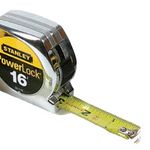
Stanley Powerlock 16-ft. tape measure
With its smooth lock, tough case, compact size, and excellent accuracy, this Stanley tape is perfect for workshop use.
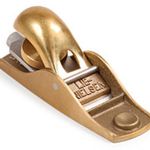
Lie-Nielsen No. 102 Low Angle Block Plane
With smooth, precise adjustments and wonderful balance, this compact block plane is a joy to use. It doesn’t have any bells and whistles, but there’s not a better block plane available for the money.
Veritas Precision Square
This precision square is incredibly versatile, from checking squareness to dialing in machine setups.
Sign up for eletters today and get the latest techniques and how-to from Fine Woodworking, plus special offers.