


Inside an Interior Designer’s 1850s Anglo-Italianate Brownstone in Brooklyn

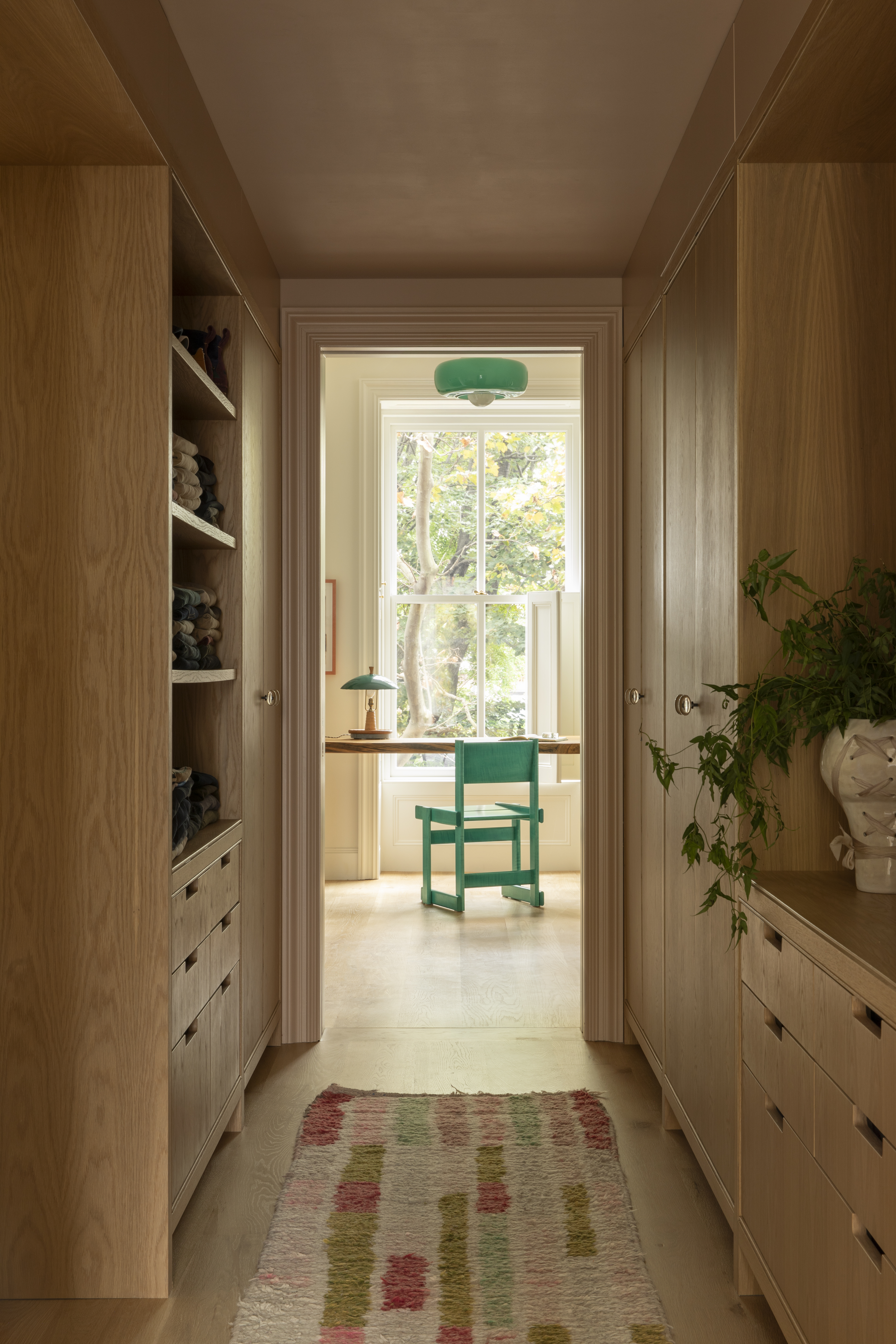
After a decade of working in fashion, five years of owning a home goods store, and 18 months of running her own interior design, styling, and creative practice, Lauren Williams Russett has one major takeaway: “I’m good at making things look pretty, is what I’ve learned.” The truth to that statement is evident in the Studio Solenne founder’s 1850s Anglo-Italianate brownstone in Brooklyn’s Cobble Hill neighborhood, which she completely reimagined while keeping historical details intact. Fresh white oak flooring and millwork is juxtaposed with original plaster moldings and tin ceilings for a charming mix of new and old.
Lauren then layered colorful textiles and art to bring a cheerful, personal air to the six-level home—but, like a true designer, she’s always switching it up. “I’m constantly changing what we have,” she admits. “It’s the nature of being a creative person. Obviously, the good pieces are staying, but I’m still reupholstering some things and rearranging rooms.” She recently moved around all her furniture to stage her first group exhibit in the house, Echoes from Upstairs, which is on view by appointment until November 14. The show highlights fine crafts by talented women but also underscores the brownstone itself as a work of art.
Let’s take a tour.
Photography by Malcolm Brown.

