


Why I Make a List Before I Ruin Perfectly Good Wood


Every project in my shop starts the same way. Before a tool is plugged in or a plane is picked up, I make a list.
I call it a triple-O—order of operations. It sounds formal, but it is anything but. It is simply a way to think through a project before the wood starts disappearing. Woodworking has a lot of moving parts, and once you cut something, you do not get it back. A checklist slows you down just enough to keep you out of trouble.
I do this for almost everything, not just woodworking. Any project with multiple steps gets written down. That habit comes straight from my time in the military. Everything had a checklist: equipment maintenance, packing, prep work. If something mattered, it was written down in the order it needed to happen—not because we could not remember but because memory is unreliable when things get busy.
The same is true in the shop.
Woodworking rewards doing things in the right order. Cut your joinery before you shape the part. Drill holes before you assemble. Flatten reference faces before you start worrying about thickness. Ignore that order, and you will eventually find yourself trying to clamp an oddly shaped piece of wood while asking why you did this to yourself. Everyone has been there. A checklist keeps you from repeating the same mistakes.
Right now, I am converting an old dining table I built years ago into an L-shaped desk for my home office. It is not a complicated project, but it has enough steps that the order matters. Break down the top. Add the new joinery. Test fit everything before final assembly. Each step builds on the last. Miss one, or do it out of sequence, and the whole thing gets harder than it needs to be.
I like using a digital tool to make my lists. Sometimes it is a word processor like Pages. Sometimes it is my Reminders app. (I am a Mac guy, but there are plenty of equivalents for Windows.) The big advantage is flexibility. I can move steps around easily. If I am halfway through typing and realize step 4 should really happen before step 3, I can reorder things in seconds.
When I used to do this on paper, I left three blank lines between each step. That way, I could add things I forgot or shuffle the order without rewriting the whole list. Once the list feels right, I print it and bring it into the shop.
I also sketch small drawings of the critical information like dimensions or how joinery relates to the various components. These are small, rough drawings on quarter-sheets of paper—nothing fancy. Those sketches get bundled with the checklist so that everything stays together in one place: cut lists, notes, dimensions.

The real payoff is continuity. When life pulls me out of the shop and into the office, I can come back later and know exactly where I left off. There’s no guessing, no head scratching, no wasted time.
If you work professionally, organization saves money. Time wasted is money burned. If you are a hobbyist, your shop time is limited. You might only have an hour here or there. Spending 20 minutes trying to remember what you were doing is frustrating and unnecessary.
Make a list. Think it through. Then build. Give it a shot.
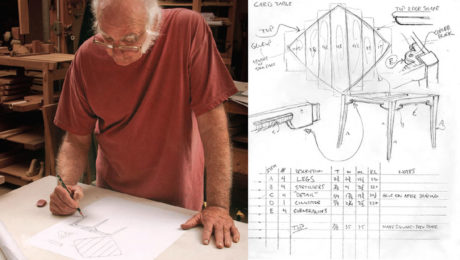
The Illustrated Cutlist
Is your shop 5S?
You can never have too much light
Sign up for eletters today and get the latest techniques and how-to from Fine Woodworking, plus special offers.