


Why Surgeons Are Paying Attention to the New Generation of Implants

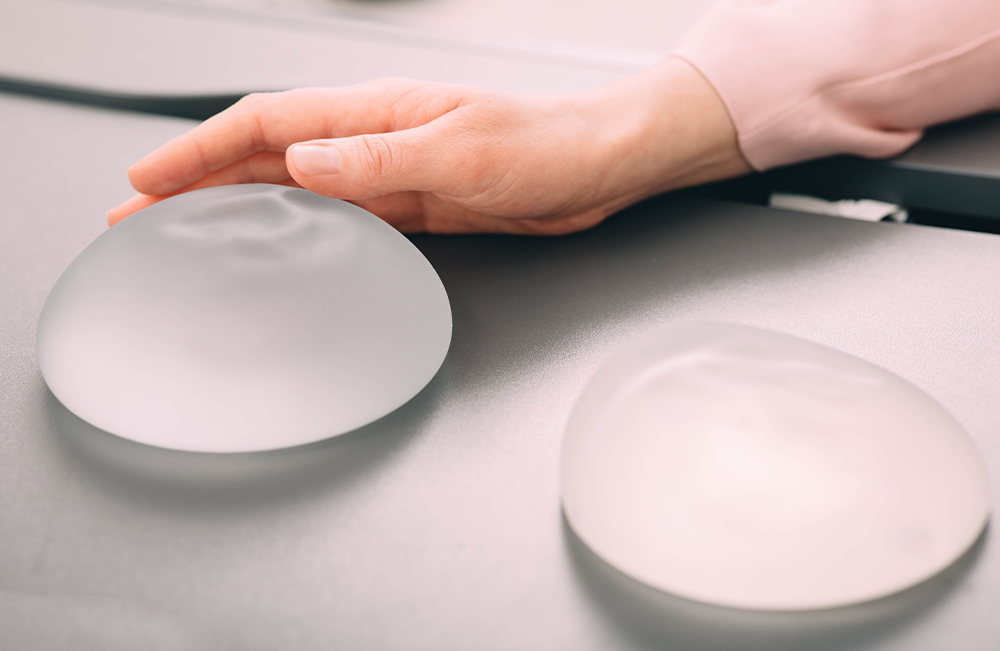
Breast implants have quietly evolved over the years and with them the expectations of women choosing them. Today’s aesthetic goals lean toward softness, movement and a naturally contoured silhouette rather than the firmer, higher, rounded look that once defined the category. With that shift comes an implant designed to better match the moment. Grand Rapids, MI plastic surgeon Bradley Bengtson, MD says the new Motiva implant introduces design updates that are reshaping conversations during consultations and reflect the growing trend toward natural, proportional outcomes.
A surface designed with the body in mind
Dr. Bengtson says the shell of the Motiva implant is engineered differently from the typical smooth surface many patients may be familiar with. “Its shell has a 4-micron surface which is classified as smooth, creating a silky, velvety feel,” he explains. “This surface creates very minimal scar tissue around the implant and almost a zero capsular contracture rate.”
While no implant is completely risk-free, this type of surface technology represents a new way manufacturers are exploring how to achieve softer, more natural results with greater comfort and lower complication rates.
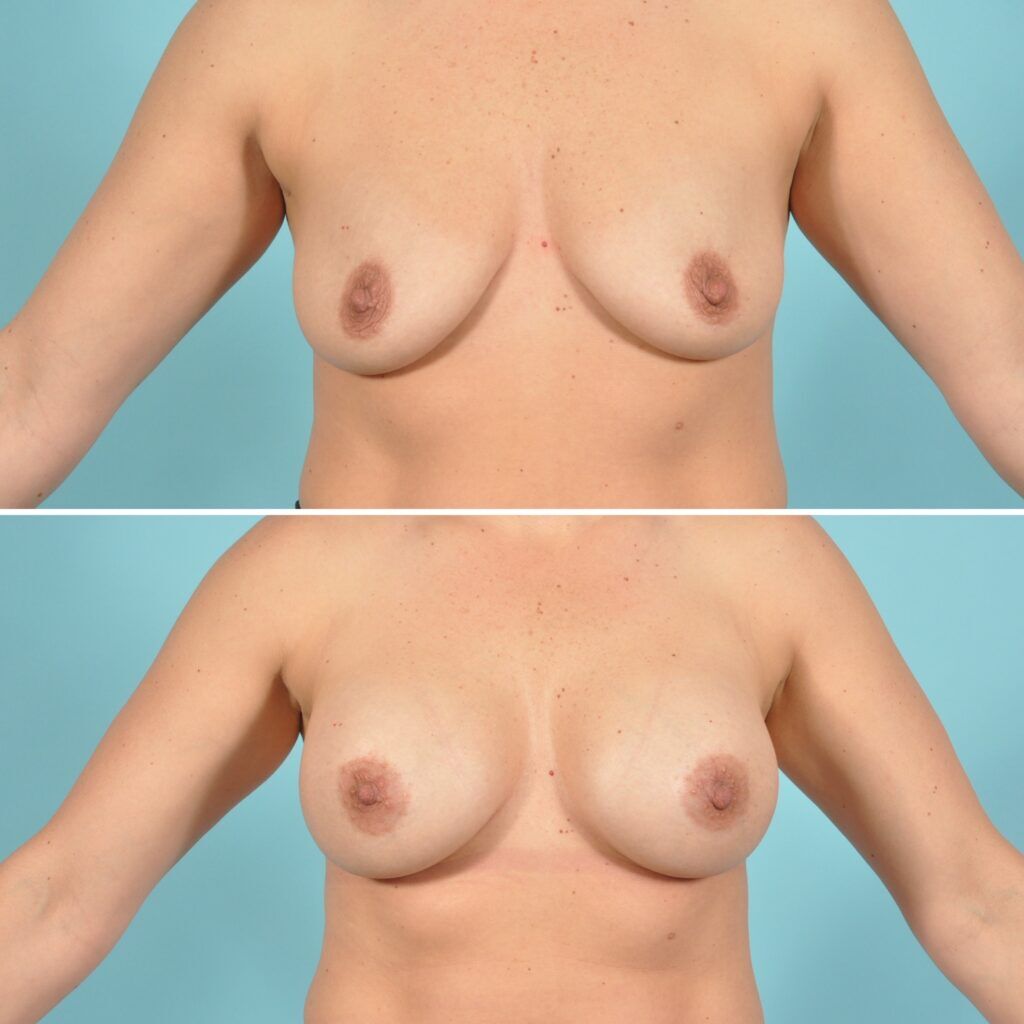
At 38, this patient had a breast augmentation with Motiva implants by Dr. Bengtson, choosing a subtle result that looks soft and natural.
A gel that shifts naturally
The internal gel is a thick, sticky, cohesive material that remains soft and mobile. Combined with reduced scar tissue formation, it moves more like natural breast tissue. For patients seeking a softer, less bulging upper breast shape, Dr. Bengtson says the Motiva Ergo implant can create a more subtle contour while still maintaining structure. “The gel filler is much more dynamic and softer,” he says. “It settles toward the bottom of the implant when sitting or standing and combined with a more elastic, stretchy shell creates a more tapered look in the upper breast.”
He also notes that the implants are 100 percent filled. This higher fill level helps reduce wrinkling or visible rippling, which are common concerns, particularly in thinner patients.
A fit that aligns with current preferences
One of the biggest shifts Dr. Bengtson sees is in patient preference. Many are choosing smaller sizes that create more natural silhouettes rather than the larger, fuller styles popular in past decades. “Patients looking for smaller-shaped breasts with softer, natural, proportional outcomes tend to choose Motiva implants,” he says.
He emphasizes that implant choice is highly individualized and should reflect a patient’s anatomy, goals and skin quality rather than trends. With greater longevity in mind, patients are increasingly making choices for the long term rather than just the here and now.

Dr. Bengtson performed a breast augmentation with Motiva implants for this 21-year-old patient to achieve the shape and volume she was looking for.
Placement and recovery continue to evolve
Advances in implant design are also influencing surgical technique and implant pocket position. Dr. Bengtson says he is now able to place more implants above the muscle, which can offer an improved recovery experience. “With minimal scar tissue forming around the implant, I am placing more implants above the muscle than ever before,” he says.
While every recovery is personal, many patients appreciate the softer feel, reduced muscle animation and more natural movement when their anatomy supports this approach.
Patients are seeking more information
Patients are coming into consultations more informed than in the past. Dr. Bengtson notes that before Motiva, he rarely had patients request a specific implant by name.
He attributes this shift to increased access to information online and on social media, as well as growing interest in consistent, natural-looking results. As a result, this newer implant design has increasingly become part of the consultation conversation.
A promising option for revisions
For patients considering implant replacement, Dr. Bengtson says this design may be particularly appealing for those seeking a softer feel or a reduced scar tissue response. “It’s a great option for revision cases,” he says. “It creates a very soft feel with much less chance of capsular contracture.”
As always, factors such as tissue quality, implant size and support structures should be carefully evaluated during a revision consultation.