


Everything You Need to Know About the Cinematography and Lighting of Wicked: For Good

Sponsored Article
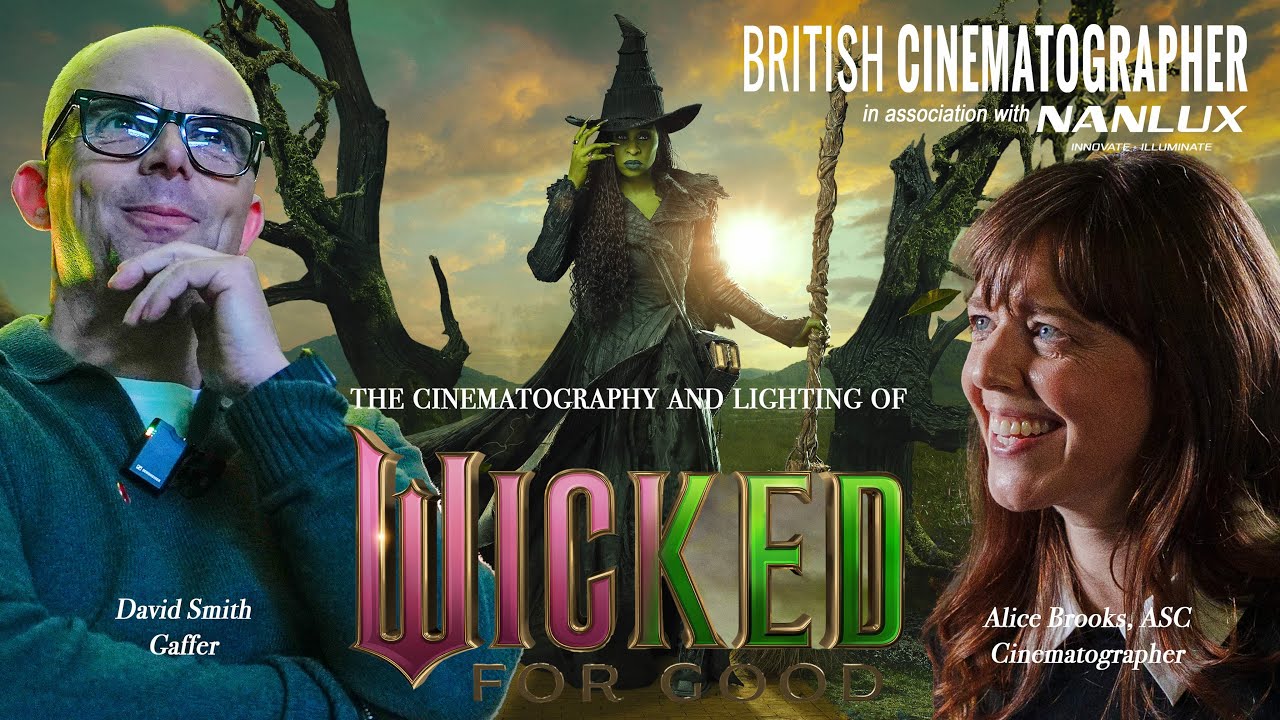
The blockbuster musical Wicked: For Good has just been shortlisted for Best Cinematography at this year’s Oscars. DP Alice Brooks, ASC, and gaffer David Smith recently sat down for an in-depth discussion about their collaboration on the film with British Cinematographer magazine, in association with NANLUX.
In the session, Brooks and Smith explain how Wicked and Wicked: For Good were shot simultaneously in the UK. Based on the hit stage musical, the films tell the origin story of Elphaba, the Wicked Witch of the West, and Glinda, the Good Witch, from the 1939 film The Wizard of Oz. The productions were enormous in scale, with a budget that allowed for massive sets to be built and lit, enabling Brooks to capture far more “in camera” rather than relying heavily on CGI.
A Handmade Film at Massive Scale
Brooks has
collaborated with director Jon M. Chu for more than 25 years, starting with a
college short musical. She describes their partnership as deeply trusting:
“He
asks everyone on his team to dream bigger than they’ve
ever dreamed before… Our hearts are in sync.”
Despite the
spectacle inherent in the world of Oz, Brooks says that Chu and the creative
team never wanted the film to feel overly glossy or synthetic.
“There were thousands and thousands and thousands of lighting cues in this movie… We really wanted the movie to feel handmade,” she explains.
“At the heart of it, it’s really this relationship movie—this love story between Elphaba and Glinda.”
On a practical level, “handmade” didn’t mean small. The two films were shot across 17 soundstages, with 73 iterations of sets, and environments so large that Brooks describes the Shiz and Emerald City sets as “each the size of four American football fields.” Both Brooks and Smith repeatedly reference the scale of the job as something almost beyond comprehension.
The Film Spanned the Transition to LED and Sustainability
While Wicked
and Wicked: For Good made extensive use of classic tungsten lighting,
the production also coincided with cinema’s
rapid transition to LED. As gaffer David Smith explains:
“We
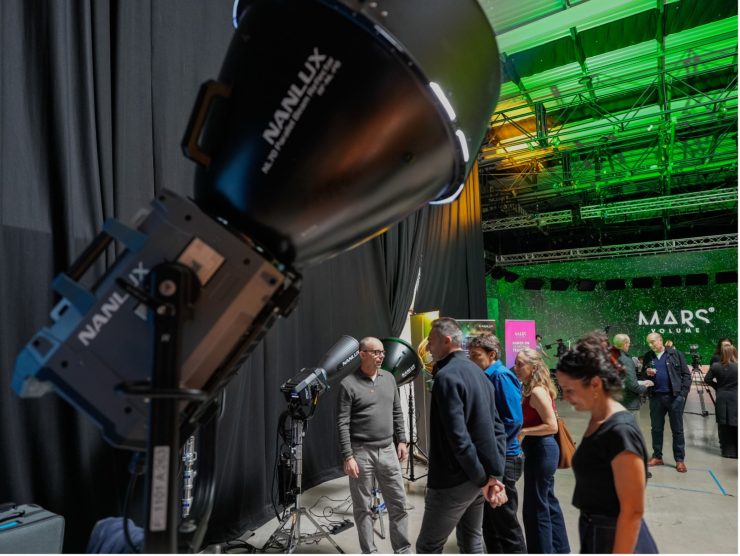
used a few NANLUX lights. It was pretty early days for those guys… we were
using the Evoke 900s back then. It was a fairly new light for us, but we used
it quite a lot.”
When asked about
the current state of lighting technology, Smith adds:
“Manufacturers like NANLUX are coming out with new fixtures all the time. It’s growing. They’re working it out. It’s all about heat—proved by fixtures like the Evoke 5000B, which is an amazing light.”
Building Oz: A Cinematography Challenge the Size of a Small Town
Brooks’ team
didn’t
just build massive indoor sets—they shaped landscapes to control sunlight. A
year before filming, Brooks stood in fields near the rural English village of
Ivinghoe, plotting solar angles for the giant Munchkinland set that would be
built there. For the tulip-field sequence, production planted nine million
tulips in directional rows based on Brooks’
and
Smith’s
calculations, ensuring the sun would strike correctly on April 15, the
pre-planned shoot day.
When the tulips
bloomed two weeks early, the team scrambled to capture them.
“It
was like a baby being born two weeks early,” Brooks recalls.
“There
was only a certain window of time where we could film them.”
The crew was equally massive. Brooks says that, between camera, lighting, and grip, more than 200 people were on set each day.
Given the scale of
the sets, sustainability became a major consideration, with the lighting
department striving for maximum efficiency. Smith explains:
“We tried to be as efficient as possible. Many of the stages were LED-only. If we could go LED, there was a conscious decision to do so—because it’s the right thing to do.”
The Online Debate: Color, Contrast & the “Oz Look”
Before the first Wicked
film even opened, social media ignited over its color palette and lighting.
Some critics questioned why the images appeared low-contrast or pastel, with
claims that the film looked “washed
out.” In this conversation, Brooks and Smith make it clear that the final look
was absolutely intentional and crafted with meticulous care.
Brooks discusses
the visual language of the films, explaining:
“There’s
one huge visual arc, but each movie has its own distinct visual style.”
Chu and Brooks
began planning the films during the COVID pandemic. She says:
“It
became very clear early on that the first movie would live in the glow of
effervescent daylight, and the second movie would be steeped in maturity,
weight, and density.”
Brooks also speaks
about avoiding trends or copying contemporary styles:
“I
didn’t
go to the movie theatre for a really long time. I would only watch old movies—The
English Patient, Spartacus,
The Sound of Music. We watched Memoirs of a Geisha and The
Tree of Life. Jon originally said he wanted the world of Oz to feel as if
Terrence Malick had stepped into Oz.”
She
goes on to explain the intentional use of color symbolism. Oz is a world where
color communicates character and emotional arcs. In Wicked: For Good’s later scenes,
Elphaba’s imagery shifts toward orange, representing
transformation, while Glinda’s blue tones represent love.
“I wanted to light the movie with every
color of the rainbow,” Brooks says, “and each color represents something.”
Every
color element was carefully integrated, from the pastel wardrobe to the
expansive sets under precisely controlled LED cues, as well as practical
flame-lit scenes. The complexity of the live lighting programming was immense.
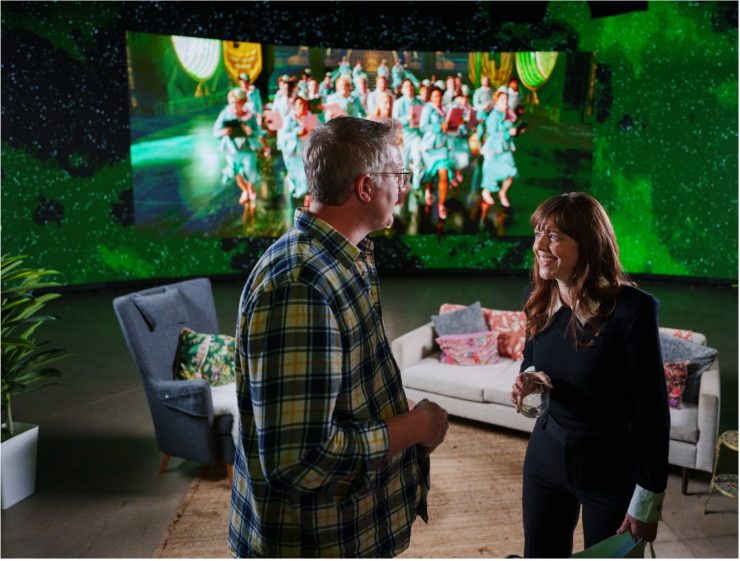
One standout sequence in the Wizard of Oz’s throne room features rainbow colors chasing around the
walls, all executed live on camera:
“The rainbow of light was this idea of
possibility… all those concentric circles you see are real, on camera. And the
women sang live. You just watch David and Daniel do these beautifully
choreographed lighting cues while we were filming.”
Attention
to lighting detail even extended to Elphaba’s witch’s hat. In fact, two different hats were used, with a
larger-brimmed version for the second film. This created a deeper, more
dramatic shadow across the actor’s face. Brooks and her team extensively tested where the
shadow would fall—right around the nose—using it to give Elphaba a bolder, more
powerful look.
In short, both films feature fully designed visual worlds created to support deeper storytelling and emotional clarity.
The Human Story Behind the DP
Brooks’ own career story is nearly as moving as the film’s. She speaks openly about almost leaving the industry
after years of struggle. A cancelled network pilot nearly ended her career, but
her husband encouraged her to give it six more months. That perseverance led to
her first major feature, and then—six months to the day—Chu called to hire her
for Home Before Dark, which eventually led to In the Heights and
now Wicked and Wicked: For Good.
Brooks
reflects:
“When you want to give up… that’s the moment you are closer than you’ve ever thought you were.”
About Alice Brooks, ASC, and David Smith
Alice
Brooks is best known for her work on the musicals Wicked, Wicked: For
Good, In the Heights, and Tick, Tick… BOOM! She is acclaimed for her dynamic lighting, expressive
camera movement, and emotionally driven visual design. A USC School of
Cinematic Arts alumna and member of the American Society of Cinematographers,
she has collaborated with directors including Jon M. Chu and Lin-Manuel
Miranda.
David Smith is one of the industry’s top gaffers, with credits that include Wicked, Spectre, Avengers: Age of Ultron, Snow White (2025), The Marvels, The Little Mermaid, Star Wars: The Last Jedi, Mary Poppins Returns, Guardians of the Galaxy, and Fast & Furious Presents: Hobbs & Shaw.
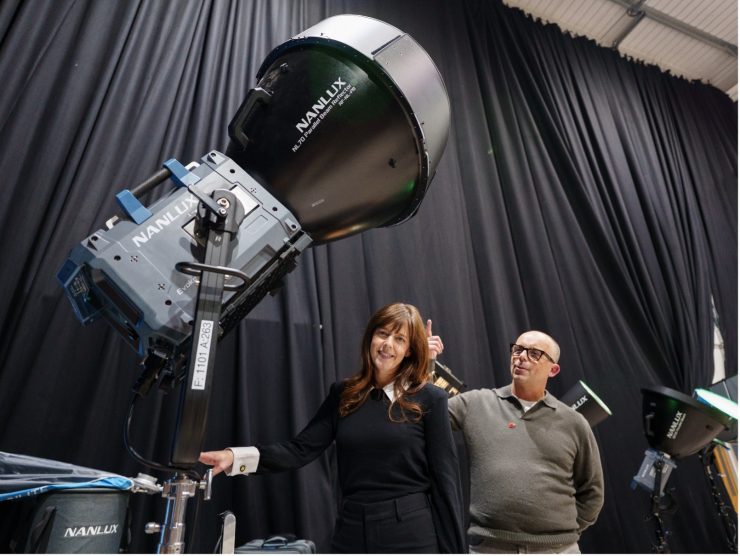
About the NANLUX Evoke LED Lineup
David
Smith is one of many gaffers regularly using NANLUX Evoke LED lights on feature
films. These fixtures offer a trusted combination of high output and
efficiency, along with robust construction, IP-rated weatherproofing, and
strong service support.
The Evoke 900C used by Smith is a high-output RGBLAC LED spotlight that delivers powerful illumination with exceptional control over color and intensity. Its ultra-wide color temperature range (1,800–20,000K) and precise G/M ±200 tuning allow seamless matching with other light sources and accurate reproduction of daylight or creative effects.
Smith also owns and uses multiple Evoke 5000B LED lights, which deliver output comparable to traditional 9kW HMI or 24kW tungsten fixtures, making them ideal for large sets and daylight simulation while remaining more efficient and easier to rig. They feature a wide bi-color range (2700–6500K), fine green/magenta adjustment, excellent color fidelity, and an all-in-one IP66 magnesium-alloy design.
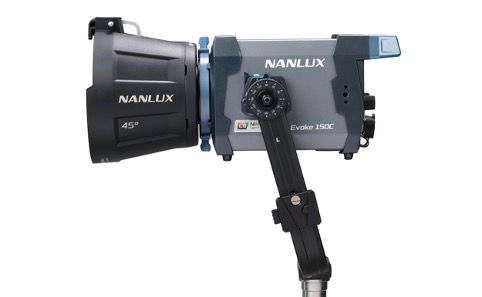
More recently, Smith has added the Evoke 150C and Evoke 600C eight-color LED lights to his arsenal. These IP-rated fixtures use the advanced Nebula C8 light engine, delivering greater color saturation across the visible spectrum with 94% Rec. 2020 coverage. They are particularly strong in skin tone reproduction due to enhanced red rendering. Newshooter recently covered this technology in detail here: